What is the best Dutch oven according to owners?
Owners rate the Lodge 6-Quart Enameled Dutch Oven highest, at 92% recommend across 63 owners. They describe it as comparable to Le Creuset at a fraction of the price and extremely versatile, handling soups, braising, and frying. The knock owners raise is the finish: the enamel scratches easily, and owners report it chipping or flaking off over time.
Is Le Creuset worth paying for, or does a cheaper enameled pot cook the same?
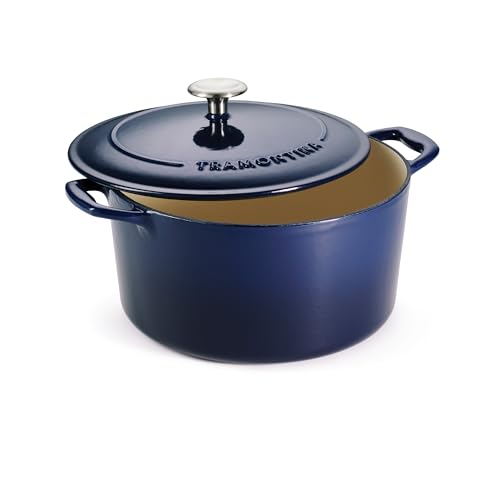
Le Creuset's Signature 5.5-Quart sits at 78% recommend, though few owners have chimed in on it so far (n=9), so that figure is less settled than the others. Owners who have one call it the highest-quality option, built to last generations, and often their most-used piece, covering soups, braises, stir fries, pasta, roasting, and bread. The pushback is a light interior that can develop brown stains and surface wear, with some owners reporting it dulling or turning sticky, and a cost several owners feel makes the trade-offs harder to overlook. The Tramontina 6.5-Quart (77%, n=71) is the counterargument: owners consistently frame it as a budget stand-in for premium enameled cast iron with cooking they call basically identical, and many report years of heavy use, citing pieces still going at 10, 15, even 20-plus years, though chipping is its most common complaint by far.
What do owners say about chipping and other enamel problems?
Chipped enamel is the complaint that repeats most across this category, though owners word it differently pot to pot. For Tramontina owners it is the most common complaint by far, sometimes right out of the box or within the first few uses, and once the enamel flakes or cracks the exposed iron can rust; the Amazon Basics Enameled Cast Iron Dutch Oven, 6-Quart (81%, n=32) shows the same pattern of chipping, cracking, and rusting, sometimes within the first year. Lodge 6-Quart Enameled owners report chipping or flaking over time plus enamel that scratches easily. Le Creuset owners also raise brown staining and surface wear on the light interior, with some reporting it dulling or pitting, and the bare-iron Lodge 5-Quart Cast Iron Double has no enamel at all, so its surface problem is seasoning eroding under steam and moisture.
Enameled or bare cast iron, which suits everyday cooking better?
The bare-iron Lodge 5-Quart Cast Iron Double Dutch Oven (90% recommend, n=105) earns its following for a lid that doubles as a skillet and a low-sided lid that makes loading bread easy, but owners call it heavy with hard-to-grip handles, and its seasoning erodes with steam and moisture. Owners of the enameled pots raise a different problem instead: the Lodge 6-Quart (92%, n=63) draws reports of enamel that scratches easily and chips or flakes over time. If eroding seasoning bothers you more than chipping and rust, go enameled; if the skillet lid and easy bread loading matter more, take the double.
What should bread bakers check before buying a Dutch oven?
Check the oven-safe rating. The Amazon Basics Enameled Cast Iron Dutch Oven, 6-Quart is capped around 400°F against Lodge's 500°F, and some owners call that gap a dealbreaker for bread baking. Some owners of that same pot report years of regular use and hundreds of bread bakes with no cracks, chips, or staining. Owners also point to the Lodge 5-Quart Cast Iron Double's low-sided lid, which makes loading bread easy.