1
Waner S.G
Most owners see the Tangzu Wan'er S.G as a standout budget pick, praising its fun, warm, bass-forward tuning for pop, hip-hop, and EDM, its light comfortable fit, and an eye-opening price-to-performance ratio that repeatedly earns 'no brainer' verdicts at $15-25. Many also recommend it as a first IEM, and some find the newer S.G/SG2 revisions tighter and more detailed than the original. A meaningful minority push back, though: durability complaints are common, with cables, connectors, or drivers failing anywhere from 6 to 17 months in, and a handful of owners find the bass boomy or muddy and the treble or vocals too forward for comfort. A smaller group also shrugs it off as overhyped, arguing it doesn't really stand out in the now-crowded sub-$20 IEM market.
84%
31
2
Quintet
Most owners rave about the Kiwi Ears Quintet's detail retrieval, technical performance, and comfortable, compact fit, frequently naming it a personal favorite that outperforms its roughly $200 price and even beats pricier sets like the Blessing 3. A vocal minority, however, finds the treble too hot, shouty, or fatiguing over long listening sessions, and a smaller group reports imprecise, bass-light tuning with mids that bleed or veil. Fit is a genuine split too: many call it the best-fitting IEM they own, while others say the long nozzles cause real ear discomfort. Overall the consensus leans strongly positive, but treble sensitivity and nozzle length are the recurring reasons a subset of buyers pass or return theirs.
68%
34
3
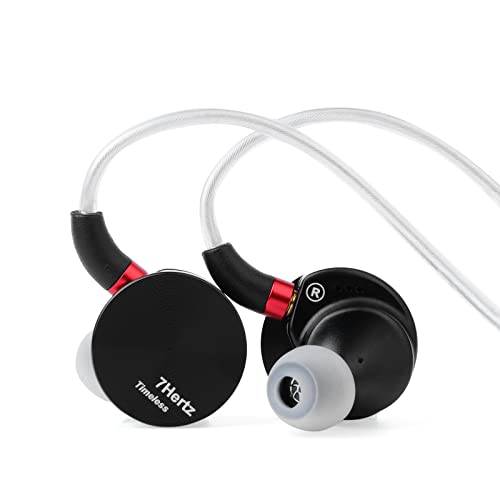
Timeless
Owners of the 7hz Timeless overwhelmingly praise it as a giant-killer: for $130-$200 it delivers detail, resolution, and soundstage that many say beats far pricier gear like the Sennheiser IE800S, 64 Audio U18s, and even $3,000+ setups, with textured, authoritative bass and comfortable daily-wear fit. A vocal minority pushes back hard, though, calling out fatiguing treble sibilance around 8kHz, a thin or metallic timbre that can feel gutless next to similarly priced hybrids, and some unit-to-unit QC issues like channel imbalance or rattling bass. A smaller but consistent complaint comes from upgraders, who feel the Timeless II narrowed the soundstage and lost detail compared to the original or AE version. Fit is polarizing too — some find the nozzle short or housing oversized for their ears. Overall consensus: a genuine budget-planar benchmark whose tuning simply isn't for everyone.
67%
175
4
7Hz Salnotes Zero 2
A standout cheap IEM praised for clear, neutral-leaning sound that over-delivers for its price. The main gripes: a bright, fatiguing treble that can hurt sensitive ears, and a stiff, uncomfortable stock cable.
67%
97
5
EW200
Owners overwhelmingly recommend the Simgot EW200 as one of the best value IEMs under $50, repeatedly praising its detail retrieval, imaging, and separation as punching well above its price, plus a comfortable small metal shell that makes it a favorite for both music and competitive gaming. The most common friction point by far is its bright, forward treble: a large minority describe it as sibilant, shouty, or outright fatiguing, with some reporting genuine ear pain or headaches within 30-60 minutes, especially at higher volumes or with a poor tip seal. A smaller group also cites thin bass or a v-shaped tuning that under-delivers on low end, occasional unit reliability issues like channel imbalance developing over months, and stock tips that don't seal well for everyone. Many treble-sensitive owners say EQ or aftermarket tuning filters meaningfully tame the harshness, turning a love-it-or-hate-it set into a keeper.
66%
456
6
Letshuoer S12 Pro
Owners praise the S12 Pro as a detailed, energetic planar that's excellent value and responds superbly to EQ, though many find its treble bright or harsh and note a metallic timbre that often needs EQ to tame.
66%
106
7
Zero Red
Owners overwhelmingly praise the Truthear Zero:Red as an exceptional value pick, with dozens calling it the best IEM they've heard under $100 thanks to its balanced, natural, non-fatiguing tuning and punchy, well-extended bass that beats gaming headsets and pricier IEMs alike. Many say it works great straight out of a phone or dongle. However, a meaningful minority pushes back hard on the hype, finding it overrated and less technical than its reputation suggests, while the most common physical complaint by far is the wide nozzle causing ear discomfort or outright pain on longer sessions. A smaller group also dings the stock cable and earloop fit, and some find the tuning swings too bassy or too thin depending on taste.
63%
38
8
Moondrop Chu II
An astonishingly good-sounding, comfortable all-metal IEM for around $20 that most owners love for vocals and clarity, though bass-lovers find it thin, the treble can run bright or fatiguing, and QC issues like clogged filters and channel imbalance come up often.
63%
203
9
Truthear Hexa
A budget IEM repeatedly called a giant-killer for its natural, detailed, neutral sound, strong imaging, and comfortable compact shell. Critics find the tuning lean or bass-light, and treble can use a touch of EQ.
60%
281
10
Blessing 3
Owners overwhelmingly praise the Blessing 3 for its resolution, clarity, and technical performance, with many calling it an endgame IEM that outclasses its price and even beats out pricier rivals. It's also seen as a genuine technical step up from the Blessing 2/Dusk, and owners who EQ in some extra bass often end up loving it even more. The clear sticking point is tuning: a persistent mid-bass dip and lean, thin vocal presentation show up again and again as the set's signature flaw, paired with a bright treble that some find fatiguing or piercing. A meaningful minority ultimately prefers the fuller-sounding Blessing 2/Dusk, and a handful flag nozzle design and build/QC issues as additional annoyances.
58%
33
11
KZ EDX Pro
A remarkable-value budget IEM with punchy bass and surprising clarity for the money, though the V-shaped tuning brings sharp, harsh treble and the cable is prone to oxidizing green over time.
57%
121
12
Etymotic ER2XR
Owners overwhelmingly praise the ER2XR's isolation, calling it competitive with or better than ANC headphones for flights, commutes, and blocking out households, paired with an accurate, detailed, reference-grade tuning that many use as their benchmark for other IEMs and standout value for the price. A meaningful minority pushes back on the deep-insertion fit, describing it as uncomfortable or painful, and there's a recurring, more alarming complaint that the stock silicone flange tips can pop off and lodge in the ear canal, driving many owners to switch to foam tips instead. Others flag that the earpieces protrude too much to sleep in comfortably and that regular deep-seal wear can contribute to impacted earwax. A smaller group also finds the neutral tuning too nasal, thin, or bass-light for their taste, preferring warmer alternatives.
48%
77